
A warm fire on a cold night is one of the best parts of winter. But while you enjoy the heat, a hidden danger may be growing inside your chimney. Over time, burning wood creates a highly flammable substance that sticks to your flue. This is why a creosote buildup fire risk is something every homeowner needs to take seriously.
In this guide, we will explain what creosote is, how it forms, and the stages of danger it creates. Most importantly, you will learn how to protect your home and family from a creosote buildup fire risk before you light your next fire.
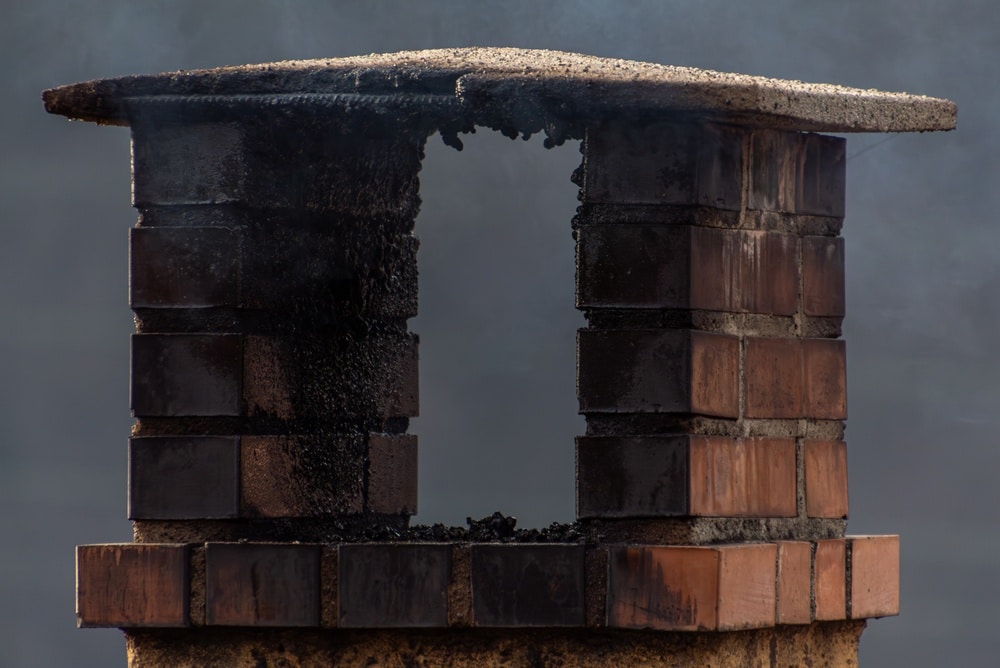
What Is Creosote and How Does It Form?
When you burn wood, the fire releases smoke, water vapor, unburned wood particles, and various gases. As this mixture travels up into the cooler area of your chimney flue, condensation happens. The resulting residue that sticks to the inner walls of your chimney is called creosote.
Every wood-burning fire creates some amount of this substance. Even if you practice good burning habits, you cannot stop it entirely. If left uncleaned, the layers grow thicker and more dangerous, greatly increasing your creosote buildup fire risk.
The Three Stages of a Creosote Buildup Fire Risk
Creosote does not just get thicker over time; it also changes form. Understanding these stages helps explain why a creosote buildup fire risk becomes much more dangerous the longer you wait to clean it.
Stage 1: Flaky and loose soot
In the first stage, creosote is mostly a velvety, flaky soot. This type is very easy to remove with basic chimney brushes. However, if you ignore it, the soot acts as a foundation for heavier buildup.
Stage 2: Hard, tar-like flakes
As more residue gathers, the creosote turns into hard, crunchy flakes that resemble black tar. At this point, a creosote buildup fire risk becomes more serious. Normal brushing will not easily remove it, and a professional sweep is usually required to safely clear the flue.
Stage 3: Sticky, highly flammable glaze
The final stage is the most dangerous. The creosote becomes a thick, sticky, glass-like glaze coating the inside of your chimney. It is extremely concentrated fuel. If the flue gets hot enough, this glaze can easily ignite, leading to a devastating and fast-moving chimney fire.
Warning Signs of a Creosote Buildup Fire Risk
Since you cannot easily see inside your chimney flue, how do you know if you are in danger? There are a few warning signs you can watch for around your fireplace.
Strong odors and poor drafting
If you smell a strong, campfire-like odor coming from your fireplace even when it is not in use, you likely have heavy buildup. You might also notice that smoke struggles to escape up the chimney, pushing back into your room instead.
Visible soot and debris
Look inside the firebox. If you see thick, black soot coating the damper or the upper walls, the flue above is likely in worse shape. These signs mean a creosote buildup fire risk is actively present and needs immediate attention.
Why DIY Cleaning Cannot Prevent a Creosote Buildup Fire Risk
Many homeowners try to clean their own chimneys to save money. While wiping down the firebox is helpful, DIY sweeping is rarely enough to remove a true creosote buildup fire risk.
Store-bought brushes and cleaning logs cannot scrub away Stage 2 or Stage 3 creosote. In fact, using the wrong tools can damage your flue liner, creating even more safety hazards. Professionals have the right equipment, industrial tools, and trained eyes to spot hidden damage you might miss.
How to Reduce Future Buildup in Your Chimney
While you cannot stop creosote completely, you can slow down how fast it forms. Better burning habits keep your chimney cleaner and safer.
Only burn dry, seasoned wood
Wet or unseasoned wood creates cooler, smokier fires. That extra smoke and moisture speeds up the condensation process in your chimney. Always use dry wood that has aged for at least six months.
Give your fires plenty of air
Fires need oxygen to burn hot and clean. Make sure your damper is fully open. Avoid packing the firebox too tightly, and never let a fire smolder overnight. A hot, bright fire produces far less smoke, which directly lowers your creosote buildup fire risk.
Protect Your Home With Town & Country Chimney Service
Enjoying your fireplace should bring comfort, not worry. A creosote buildup fire risk is a serious threat, but it is also completely preventable with the right care. Regular chimney inspections and cleanings keep your flue clear, safe, and ready for the cold weather.At Town & Country Chimney Service, we help homeowners protect their properties from hidden chimney dangers. Our skilled technicians have the tools and experience to safely remove heavy buildup and inspect your system for hidden damage. Do not wait until a small problem turns into a dangerous chimney fire. Contact Town & Country Chimney Service today to schedule your cleaning and eliminate your creosote buildup fire risk.
